
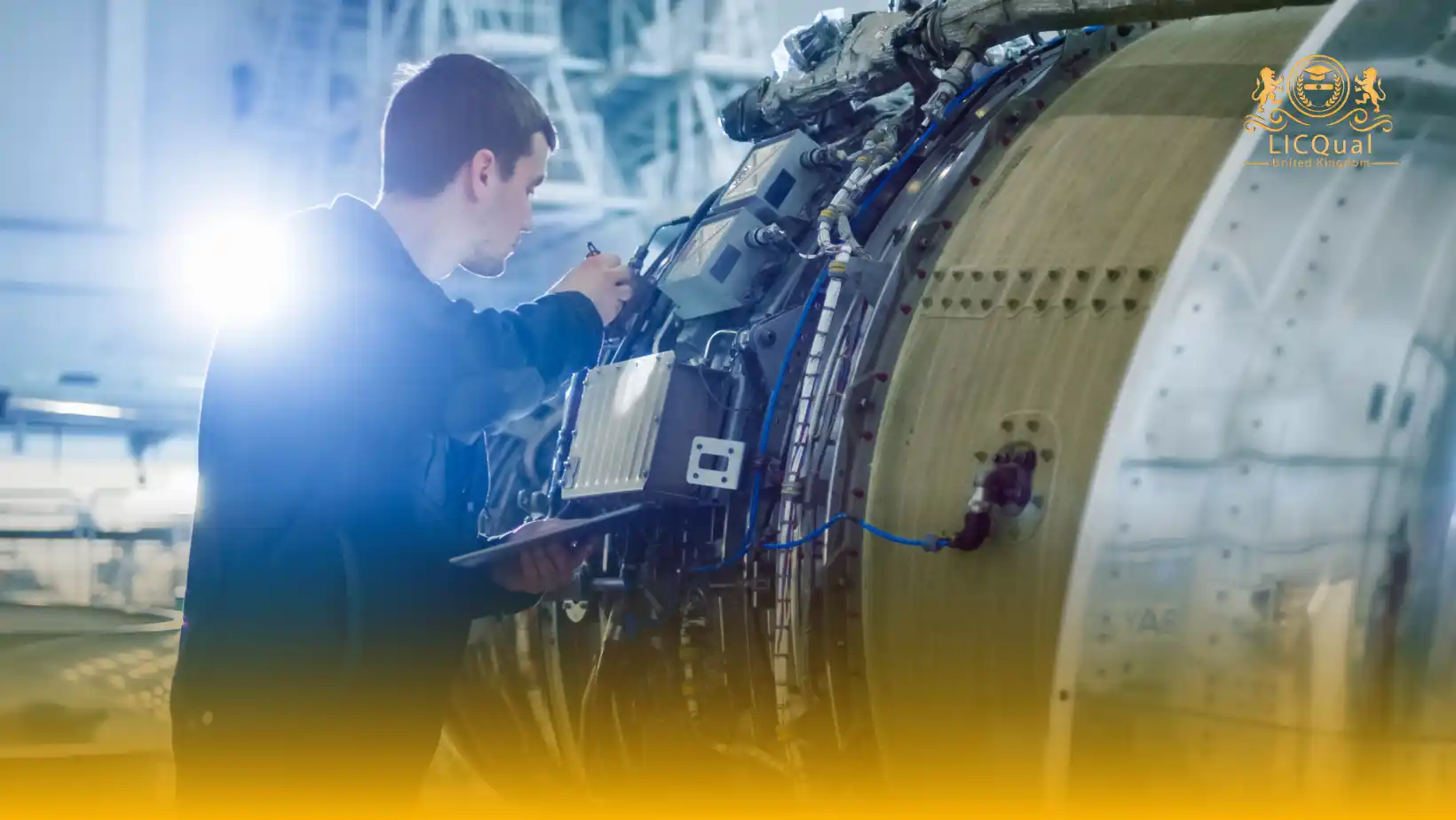
Aircraft Maintenance and Engineering Fundamentals
The LICQual UK Level 6 Diploma in Aircraft Maintenance and Engineering Fundamentals is an advanced qualification designed to provide the learner with in-depth knowledge and practical expertise in aircraft maintenance, engineering systems, and aviation safety. This course focuses on the core principles of Aircraft Maintenance and Engineering, including advanced aircraft systems, regulatory compliance, fault diagnosis, and technical operations.
It enables the learner to understand how effective engineering practices and maintenance procedures ensure aircraft reliability, safety, and operational efficiency. The program allows the learner to explore critical areas such as avionics systems, propulsion, structural integrity, quality assurance, and advanced troubleshooting techniques.
The learner will gain insight into implementing maintenance programs, managing technical documentation, and applying engineering principles to complex aviation systems. Through this qualification, the learner will develop advanced skills in problem-solving, technical decision-making, and operational management within Aircraft Maintenance and Engineering Fundamentals, supporting improved aircraft performance, safety compliance, and career advancement in the aerospace and aviation industry.
Course Overview
Qualification Title
LICQual UK Level 6 Diploma in Aircraft Maintenance and Engineering Fundamentals
Total Units
6
Total Credits
120
GLH
480
Qualification #
LICQ2201272
Qualification Specification
To enroll in the LICQual UK Level 6 Diploma in Aircraft Maintenance and Engineering Fundamentals, applicants must meet the following criteria:
|
Qualification# |
Unit Title |
Credits |
GLH |
|---|---|---|---|
|
LICQ2201272-1 |
Advanced Aerodynamics, Aircraft Performance, and Flight Mechanics |
20 |
80 |
|
LICQ2201272-2 |
Aircraft Propulsion Systems and Powerplant Engineering |
20 |
80 |
|
LICQ2201272-3 |
Avionics, Electrical, and Instrumentation Systems |
20 |
80 |
|
LICQ2201272-4 |
Advanced Aircraft Maintenance Procedures and Troubleshooting |
20 |
80 |
|
LICQ2201272-5 |
Aviation Legislation, Quality Assurance, and Compliance Management |
20 |
80 |
|
LICQ2201272-6 |
Applied Research Project in Aircraft Engineering Fundamentals |
20 |
80 |
By the end of this course, learners will be able to:
Advanced Aerodynamics, Aircraft Performance, and Flight Mechanics
Learners will be able to:
- Analyze advanced aerodynamic principles and their impact on aircraft performance.
- Evaluate flight mechanics including stability, control, and maneuverability.
- Apply performance calculations to real-world flight operations and engineering tasks.
- Assess the effects of environmental conditions on aircraft performance and safety.
- Interpret aerodynamic data to support maintenance and engineering decisions.
- Demonstrate knowledge of international standards in flight performance analysis.
Aircraft Propulsion Systems and Powerplant Engineering
Learners will be able to:
- Explain the design, operation, and performance of piston, turbine, and jet engines.
- Diagnose common issues in propulsion systems using advanced troubleshooting methods.
- Apply engineering principles to optimize powerplant efficiency and reliability.
- Evaluate maintenance procedures for compliance with international aviation standards.
- Analyze the environmental and safety considerations of aircraft propulsion systems.
- Demonstrate practical understanding of powerplant engineering documentation.
Avionics, Electrical, and Instrumentation Systems
Learners will be able to:
- Describe the function and integration of avionics, electrical, and instrumentation systems.
- Apply diagnostic tools to identify and resolve faults in avionics and electrical circuits.
- Evaluate the role of digital systems and automation in modern aircraft.
- Interpret wiring diagrams, schematics, and technical manuals accurately.
- Ensure compliance with international aviation standards for avionics maintenance.
- Demonstrate effective troubleshooting of complex electrical and instrumentation systems.
Advanced Aircraft Maintenance Procedures and Troubleshooting
Learners will be able to:
- Apply advanced maintenance techniques to ensure aircraft airworthiness.
- Diagnose and resolve complex faults in aircraft systems and structures.
- Evaluate maintenance schedules and procedures for efficiency and compliance.
- Demonstrate safe use of advanced tools, equipment, and diagnostic technologies.
- Implement predictive and preventive maintenance strategies in aviation.
- Align maintenance practices with ICAO, EASA, and CAA international standards.
Aviation Legislation, Quality Assurance, and Compliance Management
Learners will be able to:
- Interpret international aviation legislation and regulatory frameworks.
- Apply quality assurance principles to aircraft maintenance and engineering.
- Evaluate compliance requirements for safety, documentation, and certification.
- Demonstrate knowledge of auditing processes in aviation organizations.
- Develop strategies to ensure continuous improvement in aviation compliance.
- Promote a culture of safety, accountability, and regulatory adherence.
Applied Research Project in Aircraft Engineering Fundamentals
Learners will be able to:
- Design and conduct an applied research project in aircraft maintenance or engineering.
- Collect, analyze, and interpret aviation-related data using research methodologies.
- Apply critical thinking to solve real-world aviation engineering challenges.
- Present research findings in a professional, technical, and well-documented format.
- Evaluate the impact of research outcomes on aviation safety and engineering practices.
- Demonstrate independent learning, project management, and academic integrity.
This course is ideal for:
- Learners aiming to gain in-depth knowledge of advanced aircraft systems, avionics, and propulsion.
- Experienced technicians and engineers seeking to enhance skills in aircraft maintenance and troubleshooting.
- Learners interested in mastering regulatory compliance, aviation safety standards, and maintenance protocols.
- Professionals managing technical operations in airlines, aerospace companies, or airport maintenance units.
- Learners seeking advanced skills in fault diagnosis, structural integrity assessment, and quality assurance.
- Engineers aiming to strengthen strategic decision-making and problem-solving in complex aviation systems.
- Learners preparing for leadership roles in aircraft maintenance, engineering management, or technical supervision.
- Individuals focused on optimizing maintenance programs and operational efficiency in aviation organizations.
- Learners aiming to gain a recognized advanced qualification to boost career progression in aerospace and aviation engineering.
- Professionals looking to develop expertise in Aircraft Maintenance and Engineering Fundamentals for global aviation and aerospace operations.
Assessment and Verification
All units within this qualification are subject to internal assessment by the approved centre and external verification by LICQual. The qualification follows a criterion-referenced assessment approach, ensuring that learners meet all specified learning outcomes.
To achieve a ‘Pass’ in any unit, learners must provide valid, sufficient, and authentic evidence demonstrating their attainment of all learning outcomes and compliance with the prescribed assessment criteria. The Assessor is responsible for evaluating the evidence and determining whether the learner has successfully met the required standards.
Assessors must maintain a clear and comprehensive audit trail, documenting the basis for their assessment decisions to ensure transparency, consistency, and compliance with quality assurance requirements.