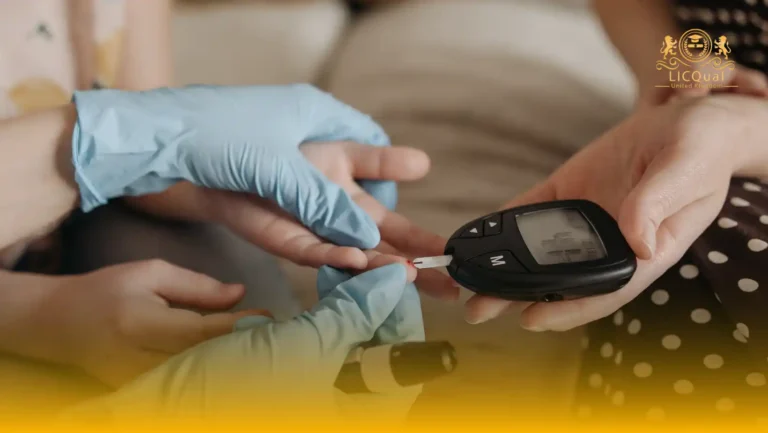

The LICQual Level 7 Postgraduate Diploma in Pediatric Nutrition and Feeding (PgD Pediatric Nutrition) is a specialised postgraduate qualification designed for professionals seeking to advance their expertise in child health, nutrition, and feeding practices. This programme provides an in-depth understanding of paediatric nutritional requirements, clinical feeding management, and evidence-based strategies to support the growth and development of infants, children, and adolescents.
This qualification is not intended for fresh candidates but is aimed at experienced professionals who wish to strengthen their knowledge, enhance their career prospects, and further their Continuing Professional Development (CPD). Learners will explore advanced topics such as paediatric dietary planning, nutritional assessment, feeding difficulties, public health nutrition, and clinical approaches to managing paediatric nutrition-related conditions.
The PgD in Pediatric Nutrition and Feeding equips learners with the practical skills and theoretical knowledge required to take on senior roles in healthcare, nutrition counselling, research, public health, and clinical practice. It also promotes the development of leadership and critical thinking skills, enabling learners to apply innovative and research-driven solutions in diverse healthcare and nutrition contexts.
Centres delivering this qualification must ensure high standards by employing competent and qualified staff, alongside providing access to essential learning materials, up-to-date research resources, and supportive learning environments. This commitment guarantees that every learner receives high-quality training and the tools required to succeed in the rapidly evolving field of pediatric nutrition.
Course Overview
Qualification Title
LICQual Level 7 Postgraduate Diploma in Pediatric Nutrition and Feeding (PgD Pediatric Nutrition)
Total Units
6
Total Credits
120
GLH
600
Qualification #
LICQ2201124
Qualification Specification
To enroll in the LICQual Level 7 Postgraduate Diploma in Pediatric Nutrition and Feeding (PgD Pediatric Nutrition), applicants must meet the following criteria:
|
Qualification# |
Unit Title |
Credits |
GLH |
|---|---|---|---|
|
LICQ2201124-1 |
Advanced Principles of Pediatric Nutrition |
20 |
100 |
|
LICQ2201124-2 |
Infant Feeding and Early Childhood Nutrition |
20 |
100 |
|
LICQ2201124-3 |
Clinical Pediatric Nutrition and Feeding Disorders |
20 |
100 |
|
LICQ2201124-4 |
Public Health Nutrition for Children and Adolescents |
20 |
100 |
|
LICQ2201124-5 |
Research Methods in Pediatric Nutrition and Feeding |
20 |
100 |
|
LICQ2201124-6 |
Leadership and Professional Practice in Pediatric Nutrition |
20 |
100 |
By the end of this course, learners will be able to:
1. Advanced Principles of Pediatric Nutrition
By the end of this unit, learners will be able to:
- Analyse the physiological and biochemical processes affecting paediatric nutritional needs.
- Evaluate nutrient metabolism and dietary requirements across different stages of childhood.
- Apply advanced nutritional principles to support healthy growth and development in children.
2. Infant Feeding and Early Childhood Nutrition
By the end of this unit, learners will be able to:
- Assess the benefits and challenges of breastfeeding, formula feeding, and complementary feeding.
- Evaluate the impact of maternal nutrition on infant health outcomes.
- Develop practical strategies to optimise nutrition in early childhood.
3. Clinical Pediatric Nutrition and Feeding Disorders
By the end of this unit, learners will be able to:
- Conduct detailed nutritional assessments in paediatric clinical settings.
- Design evidence-based nutrition care plans for children with feeding disorders, allergies, and gastrointestinal issues.
- Apply advanced clinical knowledge to manage complex paediatric nutrition cases.
4. Public Health Nutrition for Children and Adolescents
By the end of this unit, learners will be able to:
- Evaluate the prevalence and impact of paediatric malnutrition, obesity, and micronutrient deficiencies.
- Critically assess public health initiatives and school-based nutrition programmes.
- Propose effective strategies to improve child and adolescent nutrition at local, national, and global levels.
5. Research Methods in Pediatric Nutrition and Feeding
By the end of this unit, learners will be able to:
- Apply advanced research methodologies relevant to paediatric nutrition and feeding studies.
- Critically evaluate clinical research, case studies, and population-level data.
- Design and present research proposals with strong methodological and ethical foundations.
6. Leadership and Professional Practice in Pediatric Nutrition
By the end of this unit, learners will be able to:
- Demonstrate leadership and decision-making skills within paediatric nutrition practice.
- Apply ethical considerations and cultural awareness to nutritional interventions.
- Integrate critical thinking and professional practice to improve health outcomes for children and families.
The LICQual Level 7 Postgraduate Diploma in Pediatric Nutrition and Feeding (PgD Pediatric Nutrition) is designed for professionals and graduates who want to specialize in pediatric nutrition and feeding. It is ideal for those seeking practical expertise, advanced knowledge, and career growth in child health, nutrition, and wellness.
Nutritionists and Dietitians
- Gain advanced knowledge of pediatric nutrition and feeding practices
- Learn to design individualized meal plans for children
- Understand growth patterns, nutritional requirements, and clinical considerations
- Apply evidence-based strategies for infant and child feeding
- Enhance professional credibility in pediatric nutrition
- Improve career opportunities in hospitals, clinics, and community nutrition
Pediatric Healthcare Professionals
- Integrate nutrition knowledge into pediatric healthcare practice
- Advise parents and caregivers on feeding and dietary strategies
- Manage nutritional interventions for common pediatric conditions
- Enhance skills for preventive child health programs
- Improve patient outcomes with evidence-based nutrition guidance
- Strengthen professional profile in child healthcare services
Child Development Specialists
- Understand the role of nutrition in cognitive and physical development
- Learn techniques for supporting healthy feeding behaviors
- Apply strategies for children with special dietary needs
- Develop programs for growth and developmental monitoring
- Use research-driven insights for practical child nutrition interventions
- Improve impact in educational or therapeutic settings
Food Industry Professionals
- Develop pediatric nutrition-focused food products
- Ensure compliance with child nutrition standards and regulations
- Understand consumer trends in healthy children’s foods
- Apply evidence-based research to product development
- Enhance marketing strategies for pediatric nutritional products
- Strengthen professional credibility in child-focused nutrition
Researchers and Practitioners
- Conduct studies in pediatric nutrition and feeding
- Analyze data to improve child health outcomes
- Publish findings to contribute to evidence-based practice
- Collaborate with healthcare and nutrition experts
- Access contemporary tools and methodologies in child nutrition research
- Apply knowledge in practical, real-world settings
Entrepreneurs and Business Leaders
- Launch or expand child nutrition-focused programs or products
- Evaluate market potential for pediatric health foods
- Apply science-backed strategies to business initiatives
- Build credibility as a certified pediatric nutrition specialist
- Create innovative solutions for child health and wellness
- Develop programs that address the nutritional needs of children
Graduates Seeking Career Specialization
- Gain practical and advanced skills in pediatric nutrition
- Increase employability in healthcare, nutrition, and child welfare sectors
- Apply knowledge directly to professional roles without further degrees
- Build expertise in feeding and dietary management for children
- Stand out as a recognized specialist in pediatric nutrition
- Access diverse career opportunities in clinical, community, and private sectors
Centres delivering the LICQual Level 7 Postgraduate Diploma in Pediatric Nutrition and Feeding (PgD Pediatric Nutrition) must demonstrate high standards of teaching, assessment, and learner support. To ensure quality delivery, centres are required to provide:
- Qualified and Experienced Staff – Tutors, assessors, and academic mentors must hold relevant postgraduate qualifications in nutrition, paediatrics, healthcare, or related fields, along with proven professional experience in paediatric nutrition and feeding.
- Comprehensive Learning Resources – Centres must provide learners with access to up-to-date academic materials, research databases, clinical case studies, and digital platforms to support advanced study.
- Appropriate Learning Environment – Training facilities must include well-equipped classrooms, clinical or laboratory spaces (where required), and reliable virtual learning platforms for blended or distance learning.
- Robust Assessment and Quality Systems – Centres should have transparent and consistent processes for learner assessment, internal verification, and quality assurance in line with international academic standards.
- Learner Support Services – Institutions must ensure ongoing academic, professional, and pastoral support, including mentoring and guidance for research and professional practice.
- Commitment to Quality Assurance – Centres are expected to engage in continuous staff development, maintain rigorous internal review processes, and uphold LICQual’s quality benchmarks for programme delivery.
By meeting these centre requirements, institutions guarantee that learners undertaking the PgD Pediatric Nutrition and Feeding receive high-quality training, enabling them to achieve excellence in their professional and academic development.
Assessment and Verification
All units within this qualification are subject to internal assessment by the approved centre and external verification by LICQual. The qualification follows a criterion-referenced assessment approach, ensuring that learners meet all specified learning outcomes.
To achieve a ‘Pass’ in any unit, learners must provide valid, sufficient, and authentic evidence demonstrating their attainment of all learning outcomes and compliance with the prescribed assessment criteria. The Assessor is responsible for evaluating the evidence and determining whether the learner has successfully met the required standards.
Assessors must maintain a clear and comprehensive audit trail, documenting the basis for their assessment decisions to ensure transparency, consistency, and compliance with quality assurance requirements.