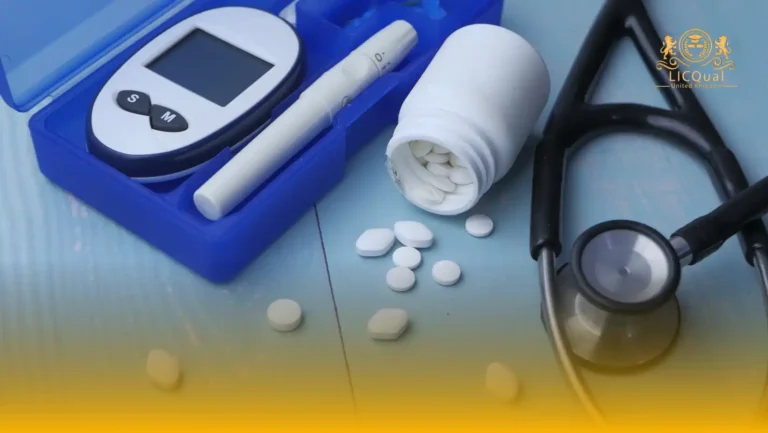

The LICQual Level 3 Diploma in Clinical Pharmacokinetics (Dip Clinical Pharmacokinetics) is a specialized qualification designed for professionals who wish to advance their expertise in the field of pharmacokinetics. This programme equips learners with in-depth knowledge of drug absorption, distribution, metabolism, and excretion, enabling them to make informed decisions in clinical and research settings. By focusing on the principles of pharmacokinetics, learners gain the essential skills required to improve therapeutic outcomes, optimize treatment strategies, and contribute effectively to the healthcare and pharmaceutical sectors.
This qualification is particularly valuable for those looking to enhance their career prospects, expand their scientific understanding, and actively engage in Continuing Professional Development (CPD). It supports learners in developing analytical and critical-thinking abilities, ensuring they are prepared to apply evidence-based approaches within their professional roles.
Centres offering the LICQual Level 3 Diploma in Clinical Pharmacokinetics are required to meet strict quality standards. They must ensure the availability of competent and qualified staff, along with appropriate facilities, study materials, and resources. This guarantees that every learner receives high-quality training and the support necessary to achieve success in their studies and future career.
With its strong academic foundation and practical relevance, this diploma serves as a valuable pathway for professionals seeking to excel in the areas of pharmacy, medicine, and healthcare research.
Course Overview
Qualification Title
LICQual Level 3 Diploma in Clinical Pharmacokinetics (Dip Clinical Pharmacokinetics)
Total Units
6
Total Credits
60
GLH
240
Qualification #
LICQ2201183
Qualification Specification
To enroll in the LICQual Level 3 Diploma in Clinical Pharmacokinetics (Dip Clinical Pharmacokinetics) , applicants must meet the following criteria:
|
Qualification# |
Unit Title |
Credits |
GLH |
|---|---|---|---|
|
LICQ2201183-1 |
Fundamentals of Pharmacokinetics |
10 |
40 |
|
LICQ2201183-2 |
Drug Absorption, Distribution, Metabolism and Excretion (ADME) |
10 |
40 |
|
LICQ2201183-3 |
Pharmacokinetic Modelling and Parameters |
10 |
40 |
|
LICQ2201183-4 |
Clinical Applications of Pharmacokinetics |
10 |
40 |
|
LICQ2201183-5 |
Drug Interactions and Therapeutic Drug Monitoring (TDM) |
10 |
40 |
|
LICQ2201183-6 |
Research Methods and Evidence-Based Practice in Clinical Pharmacokinetics |
10 |
40 |
By the end of this course, learners will be able to:
Unit 1: Fundamentals of Pharmacokinetics
By the end of this unit, learners will be able to:
- Explain the key principles and concepts of pharmacokinetics.
- Differentiate between pharmacokinetics and pharmacodynamics.
- Describe the significance of pharmacokinetics in healthcare and drug development.
- Apply basic pharmacokinetic principles to simple case studies.
Unit 2: Drug Absorption, Distribution, Metabolism and Excretion (ADME)
By the end of this unit, learners will be able to:
- Identify the main processes of absorption, distribution, metabolism, and excretion.
- Evaluate factors influencing ADME and their impact on drug effectiveness.
- Interpret ADME data to assess drug safety and therapeutic use.
- Apply ADME principles to predict patient-specific drug responses.
Unit 3: Pharmacokinetic Modelling and Parameters
By the end of this unit, learners will be able to:
- Define key pharmacokinetic parameters such as clearance, volume of distribution, and half-life.
- Explain the principles of compartmental and non-compartmental modelling.
- Use mathematical and graphical methods to interpret pharmacokinetic data.
- Apply modelling approaches to optimise drug dosing strategies.
Unit 4: Clinical Applications of Pharmacokinetics
By the end of this unit, learners will be able to:
- Explain the role of pharmacokinetics in clinical practice.
- Assess the influence of age, genetics, disease states, and organ function on drug kinetics.
- Apply pharmacokinetic principles to adjust dosing in special populations (e.g., paediatrics, renal impairment).
- Critically evaluate clinical case scenarios using pharmacokinetic reasoning.
Unit 5: Drug Interactions and Therapeutic Drug Monitoring (TDM)
By the end of this unit, learners will be able to:
- Explain the mechanisms of drug–drug and drug–food interactions.
- Assess the clinical significance of pharmacokinetic interactions.
- Describe the principles and applications of therapeutic drug monitoring (TDM).
- Apply TDM strategies to ensure safe and effective patient outcomes.
Unit 6: Research Methods and Evidence-Based Practice in Clinical Pharmacokinetics
By the end of this unit, learners will be able to:
- Demonstrate understanding of research methods relevant to pharmacokinetics.
- Critically evaluate published literature and clinical evidence.
- Apply evidence-based approaches to pharmacokinetic practice.
- Design and present a small-scale project or proposal in clinical pharmacokinetics.
The LICQual Level 3 Diploma in Clinical Pharmacokinetics is designed for professionals and students who want to master the science of how medicines are absorbed, distributed, metabolized, and eliminated in the body. This internationally accredited qualification is ideal for pharmacists, healthcare professionals, researchers, and academic trainers who aim to strengthen their expertise in drug monitoring, dosage adjustment, and patient safety. With flexible online study and global recognition, it is perfect for anyone seeking career advancement, credibility, and practical skills in clinical pharmacokinetics.
1. Practicing Pharmacists
- Gain advanced knowledge of drug absorption, metabolism, and elimination processes
- Strengthen compliance with patient safety and therapeutic monitoring standards
- Enhance credibility with an internationally recognized qualification
- Prepare for leadership roles in pharmacy and clinical practice
- Stay updated with evolving pharmacokinetic models and global healthcare practices
2. Pharmacy Students and Graduates
- Build a strong foundation in clinical pharmacokinetics before entering the workforce
- Improve employability with a Level 3 diploma UK recognized
- Learn practical applications of dosage adjustment and therapeutic drug monitoring
- Gain confidence in applying pharmacokinetic principles in patient care
- Add a career‑ready certification to your academic portfolio
3. Healthcare Professionals
- Understand clinical pharmacokinetics across diverse healthcare settings
- Strengthen skills in evidence‑based decision‑making and personalized medicine
- Expand career opportunities with international accreditation
- Apply pharmacokinetic principles in multidisciplinary healthcare teams
- Improve patient trust through safe and effective drug therapy
4. Pharmaceutical Researchers
- Deepen expertise in drug formulation and pharmacokinetic modeling
- Strengthen research credibility with accredited certification
- Gain practical tools for designing and evaluating clinical studies
- Improve career advancement opportunities in pharmaceutical R&D
- Enhance knowledge of bioavailability, clearance rates, and therapeutic monitoring
5. International Candidates
- Earn a globally recognized clinical pharmacokinetics qualification
- Access flexible online study from anywhere in the world
- Meet international accreditation standards for healthcare practice
- Strengthen career prospects in diverse pharmaceutical markets
- Gain cross‑border knowledge of pharmacokinetics and drug therapy
6. Academic and Training Professionals
- Use the diploma to enrich teaching and training programs
- Gain structured knowledge of clinical pharmacokinetics for curriculum design
- Strengthen EEAT compliance in educational content delivery
- Provide students with internationally accredited learning pathways
- Enhance professional standing in academic and healthcare education
7. Career Changers and Aspiring Professionals
- Transition into pharmacy or healthcare with a recognized qualification
- Gain essential knowledge of clinical pharmacokinetics for new roles
- Build credibility in healthcare through accredited certification
- Learn practical skills for therapeutic drug monitoring and evidence‑based practice
- Open doors to career opportunities in pharmacy, research, and healthcare sectors
Centres wishing to deliver the LICQual Level 3 Diploma in Clinical Pharmacokinetics (Dip Clinical Pharmacokinetics) must meet high-quality standards to ensure learners receive excellent training and support. The following requirements are essential:
- Qualified Staff: Centres must employ competent and experienced tutors with relevant academic and professional backgrounds in pharmacokinetics, pharmacy, or healthcare.
- Adequate Resources: Centres should provide access to appropriate teaching and learning resources, including textbooks, research journals, digital platforms, and laboratory facilities where applicable.
- Assessment Facilities: Centres must ensure suitable assessment systems and environments are available to support fair and transparent learner evaluation.
- Learner Support: Centres must offer structured academic and pastoral support, including guidance for research projects, study skills, and Continuing Professional Development (CPD).
- Quality Assurance: Centres are expected to implement strong quality assurance policies, ensuring delivery, assessment, and feedback processes meet international standards.
- Access to Technology: Centres should ensure learners have access to digital tools and e-learning platforms for blended and flexible learning opportunities.
- Compliance and Standards: Centres must comply with LICQual regulatory framework to maintain consistency, fairness, and learner success across all programmes.
By fulfilling these requirements, centres can guarantee that learners undertaking the LICQual Level 3 Diploma in Clinical Pharmacokinetics receive a high-quality educational experience, preparing them for success in healthcare, pharmacy, and research careers.
Assessment and Verification
All units within this qualification are subject to internal assessment by the approved centre and external verification by LICQual. The qualification follows a criterion-referenced assessment approach, ensuring that learners meet all specified learning outcomes.
To achieve a ‘Pass’ in any unit, learners must provide valid, sufficient, and authentic evidence demonstrating their attainment of all learning outcomes and compliance with the prescribed assessment criteria. The Assessor is responsible for evaluating the evidence and determining whether the learner has successfully met the required standards.
Assessors must maintain a clear and comprehensive audit trail, documenting the basis for their assessment decisions to ensure transparency, consistency, and compliance with quality assurance requirements.