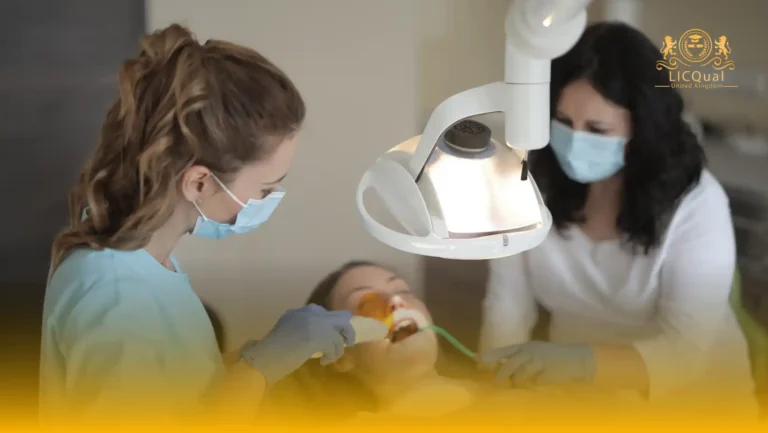

The LICQual Level 3 Diploma in Anesthesia (Dip Anesthesia) is a specialised qualification designed for healthcare professionals who wish to advance their expertise in the field of anaesthesia. This programme is not intended for fresh candidates but is aimed at experienced learners seeking to strengthen their professional competence, expand their knowledge base, and achieve their Continuing Professional Development (CPD) goals.
Anaesthesia plays a critical role in modern healthcare, ensuring patient safety and comfort during surgical and medical procedures. This diploma equips learners with the essential principles and practices of anaesthesia, including pre-operative assessment, pharmacology, pain management, monitoring techniques, and post-operative care. By focusing on both theoretical understanding and applied skills, this qualification prepares learners to deliver high-quality anaesthetic care within clinical and multidisciplinary healthcare settings.
The programme is particularly valuable for healthcare professionals such as doctors, nurses, paramedics, and allied health practitioners who wish to enhance their career opportunities in anaesthesia and perioperative medicine. Learners gain insights into international best practices and standards, enabling them to apply their skills confidently in diverse healthcare environments.
Centres offering the LICQual Level 3 Diploma in Anaesthesia must ensure that they have qualified and competent staff, along with the appropriate facilities, learning materials, and resources to deliver outstanding training. This ensures that every learner receives a high-quality educational experience aligned with global healthcare standards. By completing this qualification, learners will not only improve their clinical knowledge but also advance their professional standing in the healthcare sector.
Course Overview
Qualification Title
LICQual Level 3 Diploma in Anesthesia (Dip Anesthesia)
Total Units
6
Total Credits
60
GLH
240
Qualification #
LICQ2200881
Qualification Specification
To enroll in the LICQual Level 3 Diploma in Anesthesia (Dip Anesthesia), applicants must meet the following criteria:
|
Qualification# |
Unit Title |
Credits |
GLH |
|---|---|---|---|
|
LICQ2200881-1 |
Fundamentals of Paediatric Surgery |
10 |
40 |
|
LICQ2200881-2 |
Pre-Operative Assessment and Patient Preparation |
10 |
40 |
|
LICQ2200881-3 |
Anaesthesia and Pain Management in Paediatric Surgery |
10 |
40 |
|
LICQ2200881-4 |
Surgical Techniques and Intra-Operative Care |
10 |
40 |
|
LICQ2200881-5 |
Post-Operative Care and Complication Management |
10 |
40 |
|
LICQ2200881-6 |
Professional Practice and Ethical Considerations in Paediatric Surgery |
10 |
40 |
By the end of this course, learners will be able to:
Unit 1: Fundamentals of Paediatric Surgery
Learners will be able to:
- Explain the scope, principles, and importance of paediatric surgery in modern healthcare.
- Identify differences between paediatric and adult surgical approaches.
- Apply the concepts of patient safety and child-centred surgical care.
- Recognise common conditions requiring paediatric surgical intervention.
Unit 2: Pre-Operative Assessment and Patient Preparation
Learners will be able to:
- Conduct comprehensive pre-operative evaluations for paediatric patients.
- Assess patient risk factors and medical histories to ensure safe surgery.
- Apply preparation protocols including fasting, medication, and psychological readiness.
- Demonstrate effective communication with children and families before surgery.
Unit 3: Anaesthesia and Pain Management in Paediatric Surgery
Learners will be able to:
- Describe the principles of paediatric anaesthesia and monitoring.
- Apply safe pain management techniques for infants and children.
- Recognise potential anaesthetic risks and how to minimise them.
- Evaluate pharmacological and non-pharmacological approaches to pain relief.
Unit 4: Surgical Techniques and Intra-Operative Care
Learners will be able to:
- Identify common paediatric surgical procedures and techniques.
- Apply infection control and aseptic practices during surgery.
- Assist in intra-operative monitoring and patient safety protocols.
- Work effectively as part of the surgical team in paediatric operations.
Unit 5: Post-Operative Care and Complication Management
Learners will be able to:
- Provide appropriate monitoring and care during the recovery phase.
- Recognise and manage common post-operative complications in paediatric patients.
- Apply strategies for effective pain relief and emotional support post-surgery.
- Support families in understanding recovery processes and discharge plans.
Unit 6: Professional Practice and Ethical Considerations in Paediatric Surgery
Learners will be able to:
- Apply professional standards and ethical guidelines in paediatric surgical practice.
- Communicate sensitively with children, families, and healthcare teams.
- Recognise legal and ethical challenges specific to paediatric surgery.
- Demonstrate reflective practice and commitment to continuing professional development (CPD).
The LICQual Level 3 Diploma in Anesthesia (Dip Anesthesia) is designed for healthcare professionals, students, and individuals who want to develop expertise in anesthesia, perioperative care, and patient safety. This accredited anesthesia diploma is ideal for those seeking CPD accreditation, career advancement, and practical skills in anesthesiology. Whether you are already working in healthcare or planning to enter the field, this Level 3 anesthesia qualification equips you with the knowledge and confidence to make a meaningful impact in surgical and clinical environments.
1. Doctors and Medical Practitioners
- Strengthen expertise in anesthesia and perioperative medicine
- Gain advanced skills in pharmacology and anesthetic techniques
- Enhance qualifications with an accredited anesthesia diploma
- Apply evidence-based practices in hospitals and surgical centers
- Earn CPD points to support ongoing professional development
2. Nurses and Allied Healthcare Professionals
- Build confidence in assisting with anesthesia and patient monitoring
- Learn strategies for pain management and post-operative care
- Strengthen qualifications with a CPD accredited anesthesia course
- Improve ability to support anesthetists in clinical settings
- Gain practical skills for both hospital and surgical environments
3. Medical and Healthcare Students
- Develop a strong foundation in anesthesiology and patient safety
- Gain a competitive edge for future medical or healthcare careers
- Access flexible online learning while continuing academic studies
- Learn practical approaches to anesthesia and perioperative care
- Earn a recognized Level 3 anesthesia qualification early in your career
4. Surgical and Operating Room Staff
- Improve knowledge of anesthesia protocols and patient safety
- Learn to manage pre-operative and post-operative procedures
- Strengthen compliance with international healthcare standards
- Enhance ability to support anesthetists and surgical teams
- Gain skills to improve patient outcomes during surgery
5. Public Health and Community Health Practitioners
- Strengthen expertise in safe anesthesia practices in community care
- Learn strategies for integrating anesthesia into public health programs
- Contribute to national and global health initiatives
- Build qualifications for roles in NGOs and healthcare organizations
- Apply anesthesia principles to diverse healthcare environments
6. NGO and Humanitarian Workers
- Prepare for healthcare delivery in underserved or crisis regions
- Gain practical skills for anesthesia in resource-limited settings
- Strengthen qualifications for roles in international aid organizations
- Learn to implement safe anesthesia practices in emergencies
- Contribute to global health and humanitarian resilience initiatives
7. Career Changers and Lifelong Learners
- Explore opportunities in healthcare, anesthesiology, and patient care
- Gain an affordable and accessible qualification in anesthesia
- Build transferable skills for roles in education, research, or policy
- Learn at your own pace with flexible online study options
- Strengthen your CV with a recognized diploma in anesthesia
Centres delivering the LICQual Level 3 Diploma in Palliative Medicine (Dip PM) must meet the following requirements to ensure the highest standards of training and learner success:
- Qualified and Competent Trainers – Centres must employ trainers with relevant academic qualifications and professional experience in palliative medicine, healthcare, or end-of-life care.
- Approved Learning Facilities – Adequate classrooms, training venues, and digital platforms should be available, equipped with modern teaching aids such as projectors, simulation tools, and e-learning resources.
- Access to Up-to-Date Learning Materials – Centres must provide learners with textbooks, case studies, clinical guidelines, journals, and online resources relevant to palliative care and medicine.
- Robust Assessment System – Ability to conduct written assignments, case studies, practical assessments, and presentations in compliance with LICQual assessment requirements.
- Quality Assurance Framework – Centres must demonstrate strong internal verification and comply with LICQual’s external quality assurance procedures to maintain international training standards.
- Blended and Online Learning Capability – Facilities to support classroom, online, or hybrid learning delivery, ensuring accessibility for both local and international learners.
- Health and Safety Compliance – Training centres must meet occupational health, safety, and accessibility requirements to provide a secure and inclusive learning environment.
- Administrative Support Staff – Centres must have trained administrative teams to handle learner registration, record keeping, assessments, and certification processes.
- Commitment to Continuous Improvement – Trainers and staff must engage in Continuous Professional Development (CPD) to keep teaching practices aligned with the latest developments in palliative medicine.
- Learner-Centred Support – Centres must provide guidance, mentoring, and pastoral care to ensure learners receive the support they need throughout their qualification journey.
Assessment and Verification
All units within this qualification are subject to internal assessment by the approved centre and external verification by LICQual. The qualification follows a criterion-referenced assessment approach, ensuring that learners meet all specified learning outcomes.
To achieve a ‘Pass’ in any unit, learners must provide valid, sufficient, and authentic evidence demonstrating their attainment of all learning outcomes and compliance with the prescribed assessment criteria. The Assessor is responsible for evaluating the evidence and determining whether the learner has successfully met the required standards.
Assessors must maintain a clear and comprehensive audit trail, documenting the basis for their assessment decisions to ensure transparency, consistency, and compliance with quality assurance requirements.