
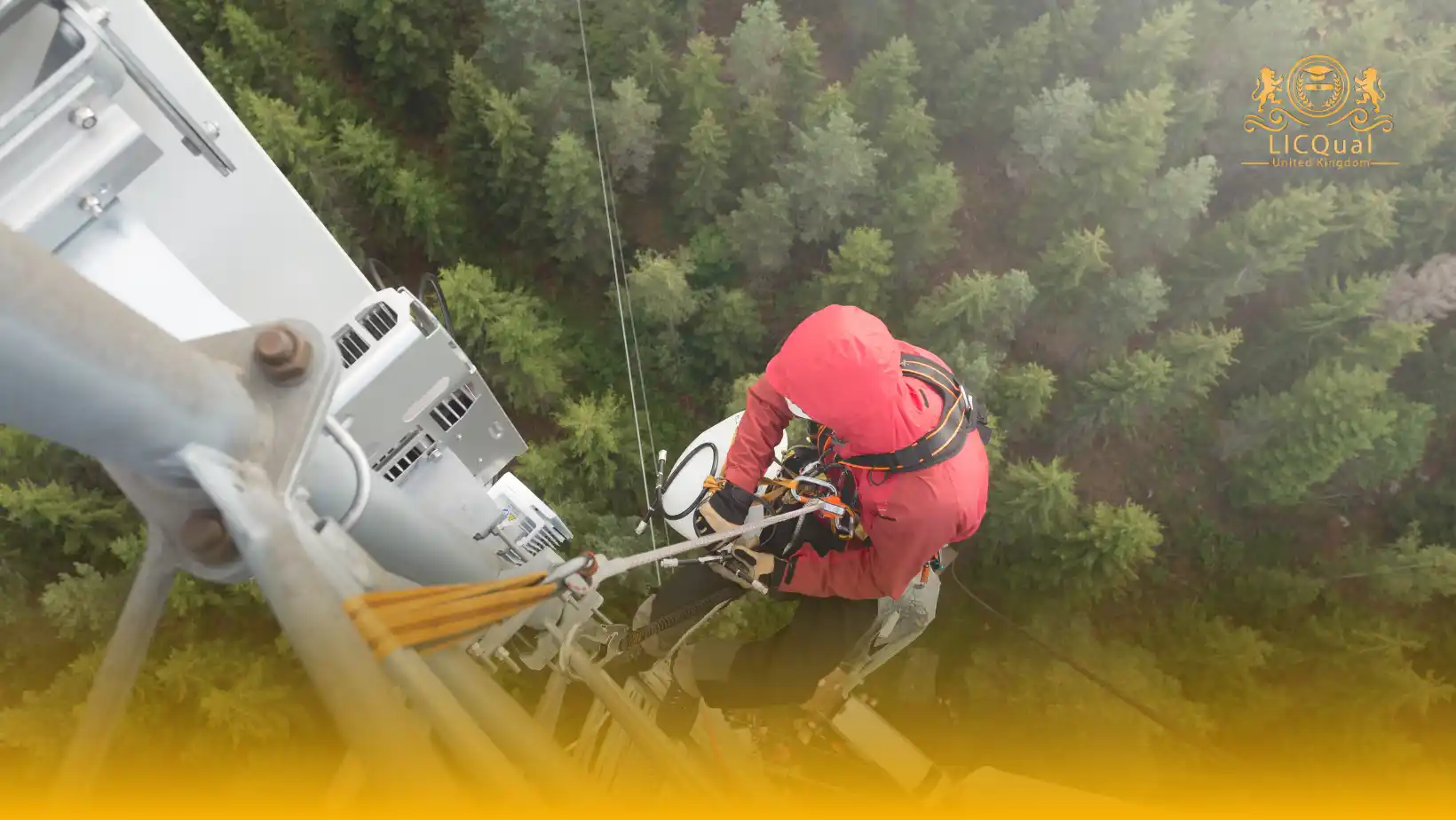
Working at Height and Rescue
The LICQual Certificate in Working at Height and Rescue is a globally recognised safety qualification developed to address one of the most significant risks in modern workplaces working at height. As falls from height continue to be a leading cause of serious injuries and fatalities across industries, this course provides learners with essential knowledge of working at height regulations, fall arrest systems training, and the correct use of PPE for working at height in accordance with international safety standards.
Learners will build practical competence in risk assessment for height work, ladder and scaffold safety training, and the implementation of safe working procedures to effectively minimise hazards and ensure operational safety. The programme places strong emphasis on real-world application by incorporating structured training in rescue procedures at height and comprehensive emergency rescue planning.
By integrating theoretical knowledge with practical skills, learners are equipped to confidently manage risks, maintain regulatory compliance, and respond effectively in emergency situations. This qualification not only strengthens professional capability but also promotes a proactive safety culture, making it a valuable credential for those seeking career advancement and excellence in health and safety management across global industries.
Course Overview
Qualification Title
LICQual Certificate in Working at Height and Rescue
Total Units
6
Total Credits
18
GLH
72
Qualification #
LICQ2201360
Qualification Specification
To enroll in the LICQual Certificate in Working at Height and Rescue, applicants must meet the following criteria:
|
Qualification# |
Unit Title |
Credits |
GLH |
|---|---|---|---|
|
LICQ2201360-1 |
Introduction to Working at Height |
3 |
12 |
|
LICQ2201360-2 |
Height Safety Regulations and Compliance |
3 |
12 |
|
LICQ2201360-3 |
Risk Assessment and Hazard Identification |
3 |
12 |
|
LICQ2201360-4 |
Fall Protection Equipment and Usage |
3 |
12 |
|
LICQ2201360-5 |
Safe Work Practices at Height |
3 |
12 |
|
LICQ2201360-6 |
Emergency Procedures and Rescue Planning |
3 |
12 |
By the end of this course, learners will be able to:
Introduction to Working at Height
- Understand the fundamental principles and importance of working safely at height across different industries.
- Identify common hazards and risks associated with elevated work environments.
- Explain the responsibilities of employers and workers in maintaining height safety.
- Recognise different types of work at height activities, including ladders, scaffolds, and platforms.
- Develop awareness of accident prevention strategies and safe behavioural practices.
Height Safety Regulations and Compliance
- Understand key height safety regulations and international compliance standards.
- Explain legal duties related to working at height and workplace safety requirements.
- Identify the importance of adhering to organisational safety policies and procedures.
- Recognise the role of inspections, audits, and documentation in ensuring compliance.
- Apply regulatory knowledge to maintain a safe and legally compliant work environment.
Risk Assessment and Hazard Identification
- Conduct effective risk assessment for height work by identifying potential hazards.
- Evaluate the level of risk associated with different work at height scenarios.
- Implement appropriate control measures to minimise or eliminate risks.
- Understand the importance of continuous hazard monitoring and reporting.
- Apply risk assessment techniques to improve workplace safety and decision-making.
Fall Protection Equipment and Usage
- Identify different types of fall protection equipment, including harnesses and fall arrest systems.
- Demonstrate correct selection, inspection, and maintenance of safety equipment.
- Understand proper usage techniques to ensure maximum protection during height work.
- Recognise equipment limitations and the importance of regular safety checks.
- Apply best practices for using PPE for working at height in real-world situations.
Safe Work Practices at Height
- Implement safe work practices for ladders, scaffolds, and elevated platforms.
- Follow standard operating procedures to minimise risks during height-related tasks.
- Maintain situational awareness and adopt safe movement techniques at height.
- Communicate effectively with team members to ensure coordinated safety measures.
- Promote a proactive safety culture through adherence to best practices.
Emergency Procedures and Rescue Planning
- Understand emergency procedures related to working at height incidents.
- Develop effective emergency rescue planning strategies for various scenarios.
- Identify roles and responsibilities during rescue operations.
- Apply rescue procedures at height to respond quickly and safely to emergencies.
- Evaluate and improve emergency response plans to ensure continuous safety enhancement.
This diploma is ideal for:
Assessment and Verification
All units within this qualification are subject to internal assessment by the approved centre and external verification by LICQual. The qualification follows a criterion-referenced assessment approach, ensuring that learners meet all specified learning outcomes.
To achieve a ‘Pass’ in any unit, learners must provide valid, sufficient, and authentic evidence demonstrating their attainment of all learning outcomes and compliance with the prescribed assessment criteria. The Assessor is responsible for evaluating the evidence and determining whether the learner has successfully met the required standards.
Assessors must maintain a clear and comprehensive audit trail, documenting the basis for their assessment decisions to ensure transparency, consistency, and compliance with quality assurance requirements.