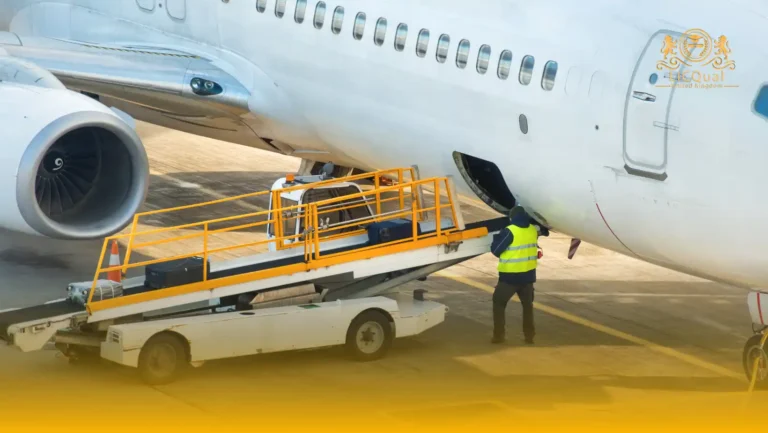

Air Cargo and Logistics Management
The LICQual UK Level 6 Diploma in Air Cargo and Logistics Management is an advanced qualification designed to provide the learner with in-depth knowledge of air cargo operations and global logistics systems. This course introduces the learner to key concepts such as freight forwarding, supply chain management, cargo handling, international trade regulations, and aviation logistics.
The learner will develop a strong understanding of how air cargo contributes to global trade and how logistics operations are managed efficiently. Throughout this course, the learner will gain practical knowledge of managing cargo operations, optimising supply chains, and ensuring compliance with international aviation standards. The learner will explore modern logistics strategies, risk management in cargo transport, and the use of technology in logistics operations.
This enables the learner to improve operational efficiency and support effective decision-making in fast-paced logistics environments. The course also helps the learner strengthen leadership, analytical, and problem-solving skills. The learner will gain the ability to manage complex logistics processes and contribute effectively to the air cargo and transportation industry.
Course Overview
Qualification Title
LICQual UK Level 6 Diploma in Air Cargo and Logistics Management
Total Units
6
Total Credits
120
GLH
480
Qualification #
LICQ2201264
Qualification Specification
To enroll in the LICQual UK Level 6 Diploma in Air Cargo and Logistics Management, applicants must meet the following criteria:
|
Qualification# |
Unit Title |
Credits |
GLH |
|---|---|---|---|
|
LICQ2201264-1 |
Strategic Air Cargo & Logistics Management |
20 |
80 |
|
LICQ2201264-2 |
Global Supply Chain & Trade Compliance |
20 |
80 |
|
LICQ2201264-3 |
Aviation Economics & Financial Management |
20 |
80 |
|
LICQ2201264-4 |
Logistics Technology & Digital Transformation |
20 |
80 |
|
LICQ2201264-5 |
Sustainability & Risk Management in Air Cargo |
20 |
80 |
|
LICQ2201264-6 |
Research Project in Air Cargo & Logistics |
20 |
80 |
By the end of this course, learners will be able to:
1. Strategic Air Cargo & Logistics Management
By the end of this unit, learners will be able to:
- Evaluate advanced strategies for managing global air cargo and logistics operations.
- Apply leadership and decision‑making skills to optimize cargo flow and supply chain efficiency.
- Analyze competitive market forces and develop strategies for sustainable growth in aviation logistics.
- Integrate IATA and ICAO standards into strategic cargo management practices.
- Design logistics frameworks that align with international trade and business objectives.
- Critically assess case studies to propose innovative solutions for complex cargo challenges.
2. Global Supply Chain & Trade Compliance
By the end of this unit, learners will be able to:
- Explain the role of global supply chains in international trade and aviation logistics.
- Apply knowledge of customs regulations, Incoterms, and trade compliance frameworks.
- Evaluate risks associated with cross‑border cargo movement and propose mitigation strategies.
- Demonstrate understanding of WTO, IATA, and ICAO trade compliance standards.
- Assess the impact of global trade policies on air cargo and logistics operations.
- Develop compliance strategies that ensure efficiency, legality, and competitiveness.
3. Aviation Economics & Financial Management
By the end of this unit, learners will be able to:
- Analyze the economic structure of the aviation and air cargo industry.
- Apply financial management tools to evaluate costs, pricing, and revenue models.
- Assess the impact of global economic trends on air cargo profitability.
- Develop financial strategies to improve operational efficiency and sustainability.
- Interpret aviation financial reports and make informed management decisions.
- Evaluate investment opportunities and risks in aviation logistics projects.
4. Logistics Technology & Digital Transformation
By the end of this unit, learners will be able to:
- Assess the role of digital transformation in modern air cargo and logistics management.
- Apply knowledge of AI, blockchain, IoT, and automation in logistics operations.
- Evaluate the benefits and challenges of adopting emerging technologies in aviation logistics.
- Design digital solutions that enhance cargo tracking, transparency, and efficiency.
- Demonstrate understanding of cybersecurity and data protection in logistics systems.
- Critically analyze case studies of successful digital transformation in global supply chains.
5. Sustainability & Risk Management in Air Cargo
By the end of this unit, learners will be able to:
- Explain the importance of sustainability in aviation and logistics operations.
- Apply risk management frameworks to identify and mitigate operational risks.
- Evaluate environmental policies and their impact on air cargo management.
- Develop strategies for green logistics and carbon footprint reduction.
- Demonstrate knowledge of crisis management and business continuity planning.
- Propose sustainable solutions that balance profitability, compliance, and environmental responsibility.
6. Research Project in Air Cargo & Logistics
By the end of this unit, learners will be able to:
- Formulate a research proposal addressing a real‑world issue in air cargo and logistics.
- Apply appropriate research methodologies and data analysis techniques.
- Critically evaluate academic and industry sources to support research findings.
- Demonstrate independent problem‑solving and critical thinking skills.
- Present research outcomes in a professional, structured, and academically rigorous format.
- Provide practical recommendations that contribute to innovation in aviation logistics.
This qualification is ideal for:
- Aspiring air cargo managers who want to build advanced knowledge in cargo operations, freight coordination, and logistics leadership.
- Logistics and supply chain professionals seeking specialized expertise in international air cargo systems and trade compliance.
- Freight forwarding professionals aiming to strengthen skills in cargo documentation, customs clearance, and shipment planning.
- Airline cargo operations staff who want to improve efficiency, risk control, and service quality in cargo handling.
- Warehouse and distribution supervisors looking to enhance inventory control, cargo flow, and operational performance.
- Professionals in import and export businesses seeking deeper understanding of global air freight and cross-border logistics.
- Learners progressing toward senior logistics qualifications or advanced studies in aviation supply chain management.
- Supply chain consultants and operations analysts interested in optimizing transportation networks and cargo performance.
- Professionals involved in aviation compliance and cargo security who need internationally relevant logistics management skills.
- Career-focused learners worldwide aiming for leadership roles in air cargo, freight logistics, and global supply chain operations.
Assessment and Verification
All units within this qualification are subject to internal assessment by the approved centre and external verification by LICQual. The qualification follows a criterion-referenced assessment approach, ensuring that learners meet all specified learning outcomes.
To achieve a ‘Pass’ in any unit, learners must provide valid, sufficient, and authentic evidence demonstrating their attainment of all learning outcomes and compliance with the prescribed assessment criteria. The Assessor is responsible for evaluating the evidence and determining whether the learner has successfully met the required standards.
Assessors must maintain a clear and comprehensive audit trail, documenting the basis for their assessment decisions to ensure transparency, consistency, and compliance with quality assurance requirements.