The LICQual Level 6 Diploma in Neurology (Dip Neurology) is an advanced qualification designed for healthcare professionals seeking to develop specialist expertise in the diagnosis, management, and treatment of neurological disorders. This diploma equips learners with comprehensive knowledge of neuroanatomy, neuropathology, clinical assessment, and evidence-based treatment strategies, enabling them to deliver high-quality patient care across a range of healthcare settings.
This programme is not intended for fresh candidates; it is specifically aimed at doctors, neurologists, nurses, and healthcare practitioners who wish to enhance their career prospects, expand their clinical knowledge, and strengthen their Continuing Professional Development (CPD). Learners will explore critical areas such as neurological assessment, common and complex neurological conditions, neuropharmacology, neuroimaging, and rehabilitation strategies. The course emphasises clinical reasoning, diagnostic accuracy, and holistic patient-centred care.
Centres delivering the LICQual Level 6 Diploma in Neurology must maintain the highest standards of training by employing competent and qualified staff, providing access to up-to-date learning resources, and ensuring availability of clinical and simulation-based training facilities. Such provisions guarantee that learners receive robust academic guidance, practical exposure, and support required for professional success.
Completing this diploma enables learners to take on advanced clinical, leadership, and research roles in neurology, contribute to improved patient outcomes, and stay at the forefront of developments in neurological care. This qualification is ideal for professionals committed to delivering expert neurological care, evidence-based practice, and excellence in clinical decision-making.
Course Overview
Qualification Title
LICQual Level 6 Diploma in Neurology (Dip Neurology)
Total Units
6
Total Credits
120
GLH
480
Qualification #
LICQ2200928
Qualification Specification
To enroll in the LICQual Level 6 Diploma in Neurology (Dip Neurology), applicants must meet the following criteria:
|
Qualification# |
Unit Title |
Credits |
GLH |
|---|---|---|---|
|
LICQ2200928-1 |
Principles of Neurology and Neuroanatomy |
20 |
80 |
|
LICQ2200928-2 |
Neurological Assessment and Diagnostic Techniques |
20 |
80 |
|
LICQ2200928-3 |
Neuropharmacology and Therapeutic Interventions |
20 |
80 |
|
LICQ2200928-4 |
Common and Complex Neurological Disorders |
20 |
80 |
|
LICQ2200928-5 |
Neuroimaging, Electrophysiology, and Advanced Diagnostics |
20 |
80 |
|
LICQ2200928-6 |
Professional Practice, Ethics, and Research in Neurology |
20 |
80 |
By the end of this course, learners will be able to:
Unit 1: Principles of Neurology and Neuroanatomy
By the end of this unit, learners will be able to:
- Critically evaluate the structure and function of the nervous system.
- Analyse neurological processes and their relevance to clinical practice.
- Demonstrate understanding of neuropathology and its impact on patient care.
- Integrate foundational neurological knowledge into evidence-based clinical reasoning.
Unit 2: Neurological Assessment and Diagnostic Techniques
By the end of this unit, learners will be able to:
- Conduct comprehensive neurological examinations and obtain detailed patient histories.
- Apply diagnostic tools and clinical tests to assess neurological function.
- Interpret findings to develop differential diagnoses.
- Integrate assessment results into patient management and care planning.
Unit 3: Neuropharmacology and Therapeutic Interventions
By the end of this unit, learners will be able to:
- Critically evaluate pharmacological principles and mechanisms in neurological care.
- Apply appropriate therapeutic interventions for common and complex neurological conditions.
- Assess the efficacy and safety of neuropharmacological treatments.
- Develop integrated care plans combining pharmacological and non-pharmacological approaches.
Unit 4: Common and Complex Neurological Disorders
By the end of this unit, learners will be able to:
- Analyse a range of neurological disorders including stroke, epilepsy, neurodegenerative diseases, and neuropathies.
- Develop evidence-based management strategies for acute and chronic neurological conditions.
- Apply multidisciplinary approaches to patient care and rehabilitation.
- Evaluate clinical outcomes and adapt management plans accordingly.
Unit 5: Neuroimaging, Electrophysiology, and Advanced Diagnostics
By the end of this unit, learners will be able to:
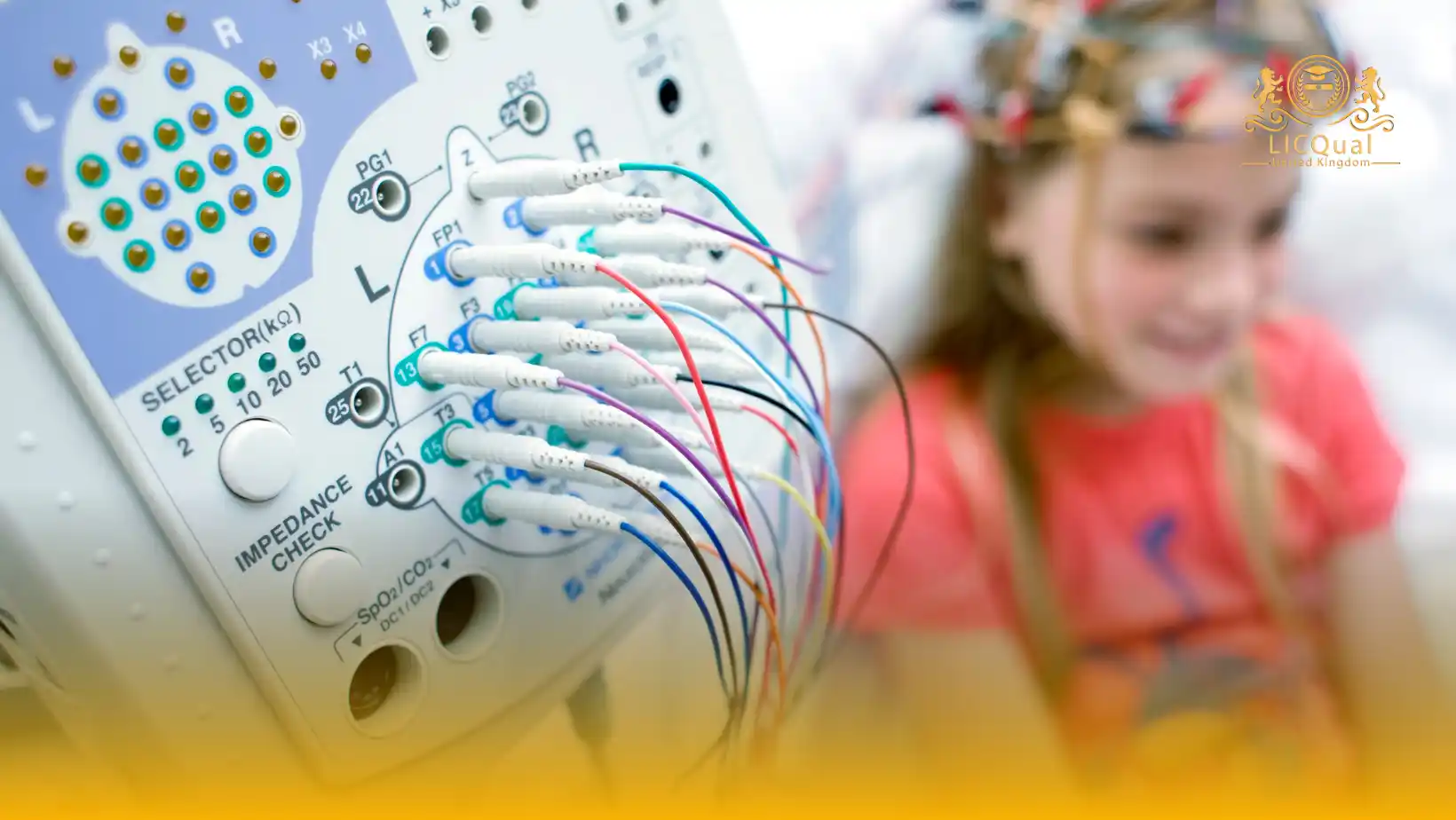
- Interpret neuroimaging modalities including MRI, CT, and EEG in clinical practice.
- Apply advanced diagnostic and electrophysiological techniques to patient assessment.
- Integrate diagnostic findings into treatment planning and decision-making.
- Critically evaluate new diagnostic technologies and their applications in neurology.
Unit 6: Professional Practice, Ethics, and Research in Neurology
By the end of this unit, learners will be able to:
- Apply ethical, legal, and professional standards in neurological practice.
- Conduct research, audits, and quality improvement initiatives to enhance patient care.
- Critically appraise scientific literature to inform clinical practice.
- Demonstrate reflective practice and commitment to Continuing Professional Development (CPD).
The LICQual Level 6 Diploma in Neurology (Dip Neurology) is designed for medical and healthcare professionals who want to enhance their understanding of neurological sciences and clinical practice. This course is ideal for individuals aiming to specialize in the diagnosis and management of neurological disorders. Whether you are a practicing doctor, nurse, medical researcher, or healthcare student, this internationally recognized qualification will help you advance your expertise, improve patient care, and open new professional opportunities in the field of neurology.
Medical Doctors and Physicians
- Gain advanced clinical knowledge in neurological diagnosis and management.
- Strengthen expertise in identifying and treating brain and nervous system disorders.
- Learn the latest international guidelines in clinical neurology.
- Improve diagnostic accuracy through neuroimaging and neurophysiological tools.
- Enhance professional credibility with a globally recognized qualification.
Neurologists and Neuroscience Specialists
- Deepen your understanding of complex neurological diseases and treatments.
- Update your knowledge on the latest advancements in neuroscience.
- Improve patient outcomes through evidence-based clinical practices.
- Expand your professional network within the neurology community.
- Develop leadership skills in specialized neurology departments.
Nurses and Allied Health Professionals
- Learn how to support patients with neurological and neurodegenerative conditions.
- Understand the role of multidisciplinary teams in neurorehabilitation.
- Gain confidence in monitoring and assisting during neurological assessments.
- Strengthen patient communication and care coordination skills.
- Enhance your qualifications for specialized neurology nursing roles.
Medical Researchers and Academic Professionals
- Explore advanced topics in neurophysiology, neuropharmacology, and neuropathology.
- Contribute to research on neurological diseases and brain function.
- Develop skills in data analysis, research design, and academic publication.
- Collaborate with global research institutions and neuroscience experts.
- Advance your academic career with a strong research-oriented foundation.
Medical and Biomedical Science Graduates
- Transition smoothly from academic learning to professional medical practice.
- Gain practical knowledge in neurological examination and interpretation.
- Strengthen your resume with an internationally recognized neurology diploma.
- Learn from real-world case studies and practical examples.
- Prepare for postgraduate medical studies or specialized clinical roles.
Healthcare Administrators and Clinical Managers
- Understand the operational and ethical aspects of neurology departments.
- Learn to manage clinical teams in hospitals and neurocare centers.
- Improve quality control and patient safety in neurological services.
- Gain insight into policy-making and healthcare management in neurology.
- Build strategic leadership skills for healthcare advancement.
Students Seeking Global Medical Careers
- Obtain a globally recognized diploma to pursue international healthcare roles.
- Develop specialized skills valued in global neurology and research sectors.
- Access opportunities in hospitals, clinics, and research institutions worldwide.
- Gain practical and analytical skills to excel in advanced medical practice.
- Stand out as a competent, skilled, and globally competitive neurology professional
To ensure high-quality training and learner success, centres delivering the LICQual Level 6 Diploma in Neurology must meet strict standards regarding staff qualifications, resources, and learner support. These requirements align with international best practices in neurological education and clinical training.
Essential Centre Requirements:
- Qualified and Experienced Staff
- Centres must employ instructors and assessors with recognised qualifications and professional experience in neurology, neuroscience, or related medical specialties.
- Staff should actively engage in Continuing Professional Development (CPD) to maintain clinical expertise and teaching competency.
- Comprehensive Learning Resources
- Learners should have access to up-to-date textbooks, journals, research databases, case studies, and digital learning platforms relevant to neurology.
- Centres must provide simulation tools and resources to support both theoretical and practical learning.
- Clinical and Practical Training Facilities
- Centres should provide access to hospital wards, neurology units, or partner clinical environments for hands-on experience in neurological assessment, diagnostics, and patient care.
- Assessment and Quality Assurance Systems
- Centres must implement robust, transparent, and fair assessment procedures in line with international academic and professional standards.
- Internal verification, moderation, and quality assurance processes should ensure consistency and reliability of learner outcomes.
- Learner Support and Guidance
- Centres must provide academic mentoring, professional guidance, and career support to help learners achieve their full potential.
- Clear communication channels should be available for feedback, queries, and learner engagement.
- Compliance and Commitment to Excellence
- Centres must adhere to LICQual policies and maintain high standards of learner welfare, safety, and ethical practice.
- Continuous improvement in teaching quality, resources, and learner outcomes is essential.
Meeting these requirements ensures learners acquire advanced expertise in neurology, preparing them for clinical, research, or leadership roles in neurological healthcare worldwide.
Assessment and Verification
All units within this qualification are subject to internal assessment by the approved centre and external verification by LICQual. The qualification follows a criterion-referenced assessment approach, ensuring that learners meet all specified learning outcomes.
To achieve a ‘Pass’ in any unit, learners must provide valid, sufficient, and authentic evidence demonstrating their attainment of all learning outcomes and compliance with the prescribed assessment criteria. The Assessor is responsible for evaluating the evidence and determining whether the learner has successfully met the required standards.
Assessors must maintain a clear and comprehensive audit trail, documenting the basis for their assessment decisions to ensure transparency, consistency, and compliance with quality assurance requirements.